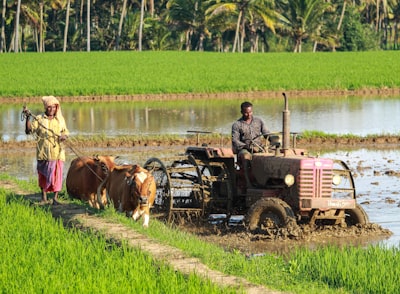
The 29th Conference of the Parties (COP29) to the United Nations Framework Convention on Climate Change brought together world leaders, climate negotiators, civil society, and communities in Baku, Azerbaijan. For the Southern Africa Climate Change Network (SACCN), COP29 represented a critical opportunity — perhaps the most important in recent years — to ensure that the voices, evidence, and demands of Southern Africa's most climate-vulnerable communities were heard at the highest levels of global climate governance.
Why COP29 Mattered for Southern Africa
Southern Africa is one of the world's most climate-vulnerable regions, yet contributes less than 2% of global greenhouse gas emissions. The 2023–2025 El Niño event — one of the most severe in recorded history — devastated agriculture across the region, pushing an additional 8 million people into acute food insecurity and causing billions of dollars in economic losses that governments and communities simply cannot absorb.
"We came to COP29 not just as advocates, but as messengers — carrying the testimonies of farmers who lost everything, of communities who watched their water sources dry up, of mothers rationing food for their children. This is not abstract policy. This is a matter of survival." — Mr Guvava, SACCN Secretariat
SACCN's COP29 Delegation and Strategy
SACCN sent a delegation of six representatives to COP29, including climate justice advocates, programme officers from EarlyAct and SeedForward, and community representatives from Zimbabwe and Zambia who spoke directly from their lived experience of climate breakdown.
The delegation's strategy was built around three core demands: first, that the New Collective Quantified Goal (NCQG) on climate finance be set at a minimum of USD 1.3 trillion annually, with a significant portion dedicated to adaptation and loss and damage; second, that the Santiago Network on Loss and Damage be operationalized with dedicated, accessible funding for SADC nations; and third, that community-based organizations and civil society networks like SACCN have formal, funded roles in the design and monitoring of loss and damage mechanisms.
Community Evidence at the Heart of the Advocacy
A defining feature of SACCN's COP29 engagement was the centering of community-gathered evidence. Rather than relying solely on scientific reports, SACCN brought documented testimonies and quantitative data collected through the EarlyAct programme's community monitoring systems and SeedForward's agrifood impact tracking.
This evidence — including the 60% reduction in crop losses achieved by EarlyAct communities in Zimbabwe, and the 4,200 seed packages distributed through the Zambian seed bank network — provided concrete proof that community-led climate solutions work, and that they require sustained funding to scale.
Outcomes and Next Steps
COP29 produced a New Collective Quantified Goal on climate finance, though the final figure fell short of what civil society demanded. SACCN, alongside partner networks, will continue advocacy through the SADC climate policy framework, the African Group of Negotiators (AGN), and UNFCCC inter-sessional processes in 2025. The fight for equitable loss and damage finance continues — and SACCN's community evidence will remain at the center of that fight.