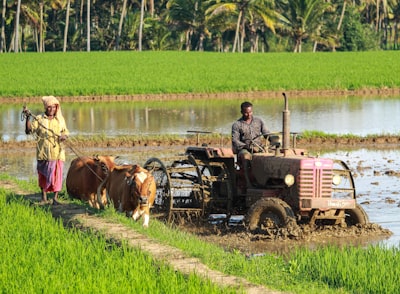
In the highlands of Masvingo Province, Zimbabwe, a quiet revolution in climate resilience has been unfolding. Farming communities that once faced each rainy season with dread — never knowing whether rains would come too early, too late, or not at all — are now equipped with something their grandparents had but their parents lost: the ability to anticipate what the skies will bring.
The Problem: A Warning System That Doesn't Reach the Last Mile
Zimbabwe has a national meteorological service with reasonable regional forecasting capacity. But that capacity rarely reaches smallholder farming communities in time to make a difference. Information gets lost between the national level and the village. By the time a farmer in a remote area hears about an approaching dry spell, she has already planted — too late to change course.
"Our elders always knew the signs. The direction of the wind, the behaviour of certain birds, the colour of the evening sky. These are not myths — they are data. What EarlyAct did was help us combine our data with the meteorologists' data." — Community Elder, Masvingo Province
How EarlyAct Works
SACCN's EarlyAct programme deploys a three-layer approach. At the community level, trained community climate monitors document traditional ecological knowledge indicators — plant behaviour, insect activity, atmospheric signs — cross-referenced against historical correlations with seasonal rainfall patterns. At the district level, SACCN facilitates monthly dialogues between community monitors and national meteorologists. And at the response level, community anticipatory action plans pre-define protective measures that activate automatically when specified warning thresholds are met.
The 2024 El Niño Test
The 2023–2025 El Niño provided a severe but decisive test of the EarlyAct system. Community monitors in Masvingo issued early warnings three weeks before the drought peak — earlier than the national meteorological service's district-level alert. Participating communities activated their anticipatory action plans: moving livestock to pre-identified emergency grazing areas, pre-positioning emergency food reserves, and mobilizing mutual support networks for the most vulnerable families.
The result: a 60% reduction in crop and livestock losses compared to non-participating communities facing the same conditions. This translates directly into fewer hungry children, less debt, and more resilient families able to plant again the following season.
Scaling the Model
Following the success in Masvingo, SACCN is expanding EarlyAct to Mozambique, Zambia, and Malawi in partnership with national meteorological services and local civil society organizations. The programme is also developing a mobile phone-based community alert system to extend early warnings to communities without reliable radio coverage.